
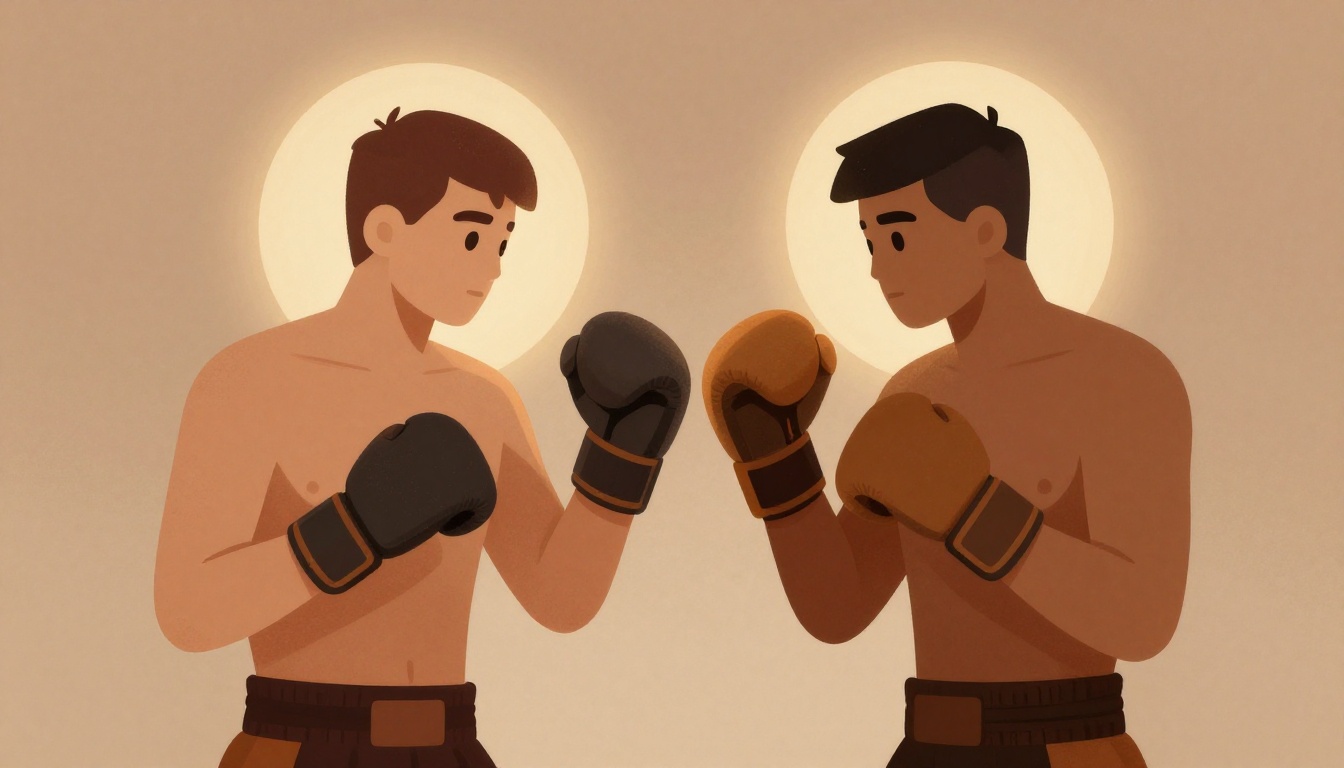
When you step into the clinch, your mind can go blank—or worse, start racing. You know the feeling: you're gripping your partner's neck, but your thoughts are everywhere except the fight. You're worried about the knee coming, the sweep you might eat, or the last round that left you gassed. That mental noise is exactly what breaks your posture and leaves you vulnerable. The clinch is a battle of attention as much as strength, and without a way to train your focus, you'll keep making the same mistakes.
The good news? You can build a clinch drill that does double duty: it sharpens your technique and trains your mind to stay locked on the present moment. This isn't about adding more complexity—it's about simplifying your reps so you can actually pay attention. As one coach notes, Muay Thai training itself can become a form of meditation when you bring mindfulness to every movement, including the clinch (NOW Muay Thai).
What is a key focus cue in the clinch drill described above?
Select one answer.
The core problem: autopilot in the clinch
Most clinch drills fail because you're on autopilot. You're moving through the motions, but your mind is elsewhere. That's a huge barrier to learning. A practitioner on Martial Arts Stack Exchange describes exactly this: during drills, they're "almost on autopilot," not really present, and it hinders absorbing the technique (Martial Arts Stack Exchange). When you're not present, you miss the subtle weight shifts, the angle changes, and the openings that make the clinch work.
To fix this, you need a drill that forces your attention to stay on three things: posture, foot position, and arm control. These are the fundamentals that keep you safe and in control (Spring Sia). When you focus on these, you're not just going through the motions—you're actively problem-solving in real time.
The drill: slow clinch with a focus cue
Here's a simple drill you can run with a partner, no pads or gloves needed. It's designed to slow everything down so you can actually think.
Setup: Stand in the clinch with your partner, both in a basic position—one hand behind the neck, one on the elbow. Keep your chin tucked and your spine aligned. This is your starting posture (Spring Sia).
The movement: For 3 minutes, you and your partner take turns being the "active" partner. The active partner works on one specific task—say, off-balancing the other by pulling the head down or shifting weight. The passive partner focuses only on maintaining posture and foot position, resisting without overexerting.
The focus cue: Every 30 seconds, the passive partner must verbally call out one thing they're aware of in the moment. It could be "my left foot is inside" or "my hips are back." This forces you to check in with your body, breaking the autopilot loop.
Switch roles after 3 minutes, then repeat for a total of 3 rounds.
This drill works because it combines the physical repetition of clinch fundamentals with a mindfulness anchor. By naming what you feel, you train your brain to stay present, which is exactly what you need when fatigue sets in and your focus starts to slip.
Why this builds mental focus
Muay Thai is known for its mental benefits, including increased focus and stress relief (Sumalee Boxing Gym). The clinch, in particular, is a pressure cooker. When you're tired, your instinct is to push harder, but that's a mistake. As one practitioner notes, when fatigued, they overcompensate by exerting more power instead of focusing on form and accuracy (Martial Arts Stack Exchange). This drill trains you to do the opposite: stay calm, stay precise, and stay aware.
By practicing mindfulness in the clinch, you're not just building a better clinch—you're building a calmer, more resilient mindset that carries over into sparring and competition. As one gym puts it, Muay Thai teaches you to focus, stay calm under pressure, and push beyond your limits (Facebook post).
Actionable checklist for your next session
- Warm up with 2 minutes of shadow clinch, focusing on your hand positions and posture.
- Run the drill for 3 rounds of 3 minutes, with the focus cue every 30 seconds.
- After each round, take 30 seconds to breathe and reset your attention.
- End with 1 minute of free clinch at 50% intensity, trying to maintain the same level of awareness.
How the Featured Expert Can Help
Ashborn Syndicate, founded by Deonitus Phoenix Black, blends martial arts training with esports and original storytelling. Their invite-only fitness programs are designed for those who want to train with the discipline of a fighter and the mindset of a protagonist. To learn more about their exclusive training approach, visit Ashborn Syndicate.
Quiz
What is a key focus cue in the clinch drill described above?
- Calling out one thing you're aware of every 30 seconds
- Increasing power to break the clinch
- Closing your eyes to concentrate harder