
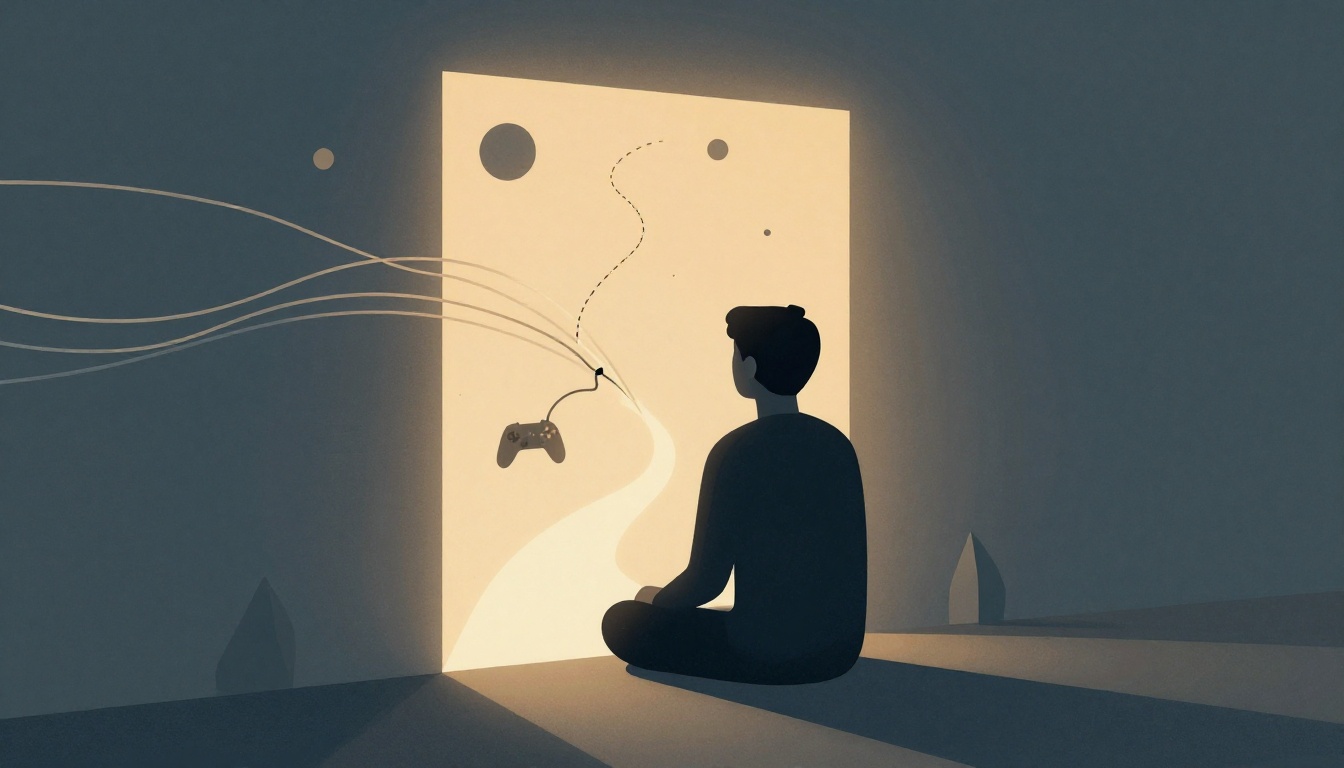
Why do some games keep you grinding for hours while others lose you after the first level? The answer often lies not in graphics or mechanics alone, but in narrative design. Narrative design is the art of pairing what players do—the gameplay verbs—with the meaning and emotion of the story. As one narrative designer puts it, it's about "designing how players play the story" (Medium). When done well, narrative design taps into deep psychological needs that drive motivation, making the difference between a forgettable session and a memorable journey.
According to research, how do narratives in video games influence player motivation?
Select one answer.
The psychology behind player motivation
Research shows that narratives in video games can directly support or thwart basic psychological needs, thereby influencing players' motivation and emotion (PMC). This aligns with Self-Determination Theory, which identifies three core needs: autonomy (feeling in control), competence (feeling capable), and relatedness (feeling connected to others). Games that satisfy these needs through their story and mechanics foster intrinsic motivation—the desire to play for the experience itself, not just external rewards.
For example, when a game lets you make choices that genuinely affect the story, it supports autonomy. When the narrative acknowledges your skill—like a character commenting on your clever solution—it boosts competence. And when you care about the characters or share experiences with friends, relatedness kicks in. These psychological levers are why narrative design is a powerful tool for keeping players engaged.
How narrative design creates meaning
Narrative design goes beyond just telling a story; it integrates story with gameplay so that actions feel meaningful. As noted in a case study on narrative design, a key example is The Legend of Zelda: Twilight Princess, where the player might experience a certain understanding of the character's motivations (Game Developer). This alignment between player and character motivation makes the journey feel personal.
A game like Dishonored is another example: the player's motivations, created through gameplay, should match the emotional beats of the story (Game Design Skills). When your actions—like choosing stealth or violence—are reflected in the world and narrative, you feel a sense of ownership. This is what turns a series of tasks into a compelling story you're co-authoring.
Practical steps to apply narrative design principles
Whether you're a game developer, a writer, or a player who wants to understand what keeps you hooked, you can apply these principles:
- Align gameplay verbs with story themes: Ensure that what players do (e.g., solving puzzles, fighting) reinforces the story's core message. If the story is about sacrifice, make the mechanics require meaningful trade-offs.
- Provide meaningful choices: Give players options that have real consequences, even if small. This supports autonomy and makes the story feel personal.
- Use environmental storytelling: Let the world itself tell part of the story—through notes, architecture, or NPC behavior. This encourages exploration and curiosity.
- Create emotional stakes: Make players care about characters or outcomes. When the narrative invests in relationships, players are more motivated to see them through.
- Balance challenge and narrative: Ensure that difficulty spikes don't break immersion. A frustrating section can undermine the story's emotional impact.
The role of player motivation models
Understanding player motivation is not just theoretical. Quantic Foundry, a company that studies gamer motivation, has built a model based on data from over 1.75 million players across 4,000+ game titles (Quantic Foundry). Their research identifies 12 distinct motivations, from action and strategy to social and immersion. This data helps developers design experiences that cater to different player types, but narrative design remains a key thread that ties these motivations together.
For instance, a player motivated by "fantasy" wants to live out a role, while a player motivated by "challenge" wants to overcome obstacles. A well-designed narrative can satisfy both by offering a rich world to inhabit and meaningful challenges to overcome. As one article notes, "Choose your mechanics and features to satisfy player needs. Some of the core player needs are living the fantasy and accomplishing feats" (Medium).
Quiz: Test your understanding
Before we wrap up, here's a quick check on what you've learned:
Question: According to research, how do narratives in video games influence player motivation?
- A. They directly support or thwart basic psychological needs.
- B. They only provide external rewards like points and loot.
- C. They have no effect on player motivation.
Correct Answer: A. They directly support or thwart basic psychological needs.
How the Featured Expert Can Help
Ashborn Syndicate, founded by Deonitus Phoenix Black, blends martial arts training, esports competition, and original dark fantasy storytelling. Their invite-only fitness programs and published saga create a unique narrative-driven experience that can inspire your own training and gaming journey. Visit Ashborn Syndicate to learn more about their exclusive community and story-driven approach.