
According to capoeira sources, what is the ginga primarily described as?
Select one answer.
Why your movement feels stiff in-game
If your aim is solid but your movement still feels jerky, you are not alone. Many players drill aim and strategy while ignoring the footwork layer underneath. The result is a character that stutters between positions, over-commits to one direction, and gets caught mid-animation.
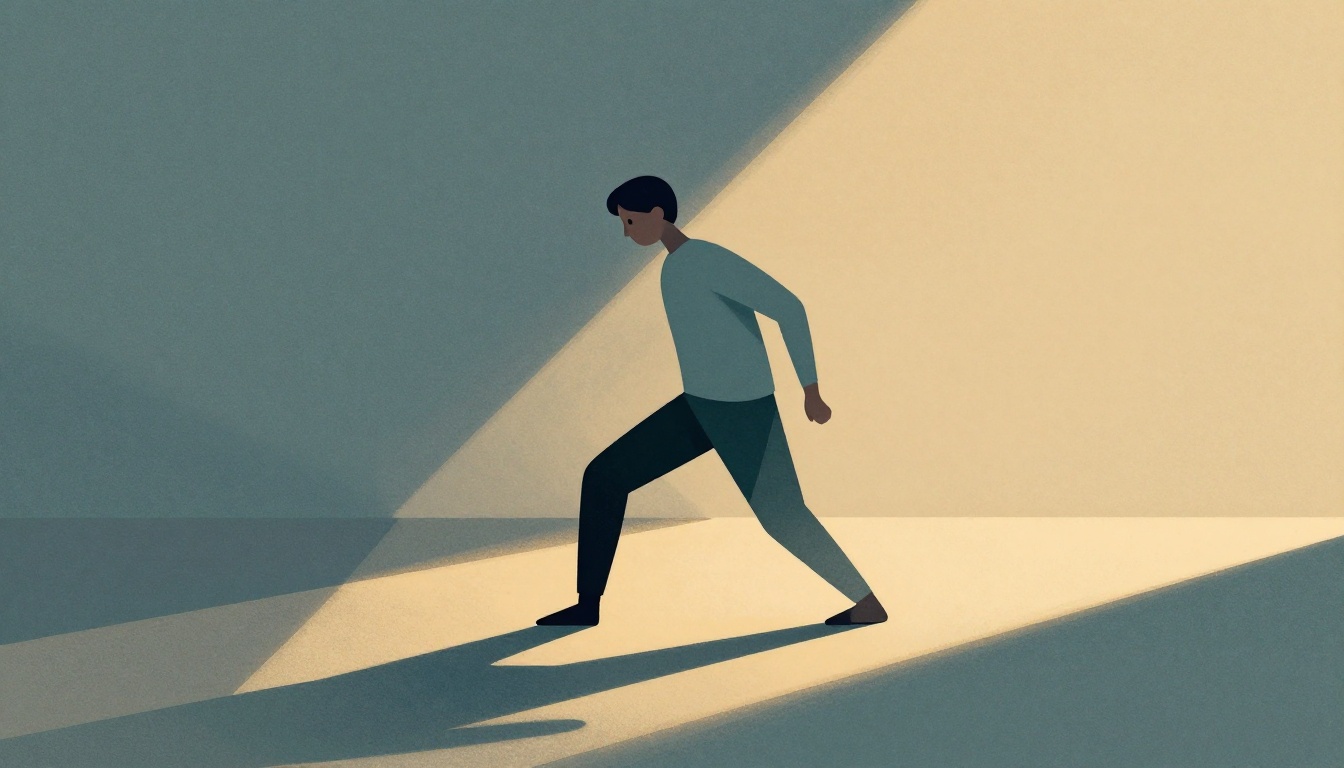
Capoeira's foundational movement, the ginga, is a continuous triangular footwork pattern that trains exactly the qualities stiff movement lacks: balance, rhythm, and readiness. According to Bambu Bodies, the ginga is the movement from which all other capoeira movements stem, and its concepts relate to walking, running, twisting, turning, jumping, and squatting. That is a broad movement vocabulary you can borrow.
What the ginga actually trains
The ginga is a perpetual, low-level aerobic activity, which Jogo Corpo Fechado describes as a highly effective form of cardiovascular training. But the benefits go beyond conditioning.
- Balance and weight transfer. You shift weight continuously between feet, which teaches you to stay stable while moving.
- Mobility through multiple angles. Dendê Arts notes that capoeira challenges your legs at different angles, making them stronger and more durable across a wide range of positions.
- Proprioception. Movement complexity builds awareness of your body in space, which is the same skill that lets you judge distance and timing accurately.
- Rhythm and reaction. A capoeira practitioner's breakdown of the ginga describes it as building strength, cardio, mobility, balance, and coordination while sharpening focus, rhythm, and reaction time.
Reaction time in martial arts is a three-stage process: stimulus, decision, response. You detect a cue, choose an action, then execute it. The ginga trains all three stages because you are constantly reading and responding to a rhythm rather than freezing in a static stance.
How to practice the ginga
You do not need a partner or a gym. A clear floor and ten minutes are enough.
- Set your base. Stand with feet shoulder-width apart, one foot slightly forward. This is your starting triangle.
- Step back and rock. Shift your weight to the back foot, then return forward. Keep your arms relaxed and moving with the rhythm.
- Add the side step. From the forward position, step to the side, then back. You are tracing a triangle on the floor.
- Keep it continuous. The ginga never stops. There is no pause at the end of each step.
- Add a beat. Count four counts per cycle: forward, back, side, return. Practicing to a metronome or drum loop helps you internalize the timing.
Start with two minutes. Build to five. Then ten. The goal is smoothness, not speed.
Transferring ginga to your game
Once the pattern feels natural, you can map it onto your controls.
- Strafing. The side step of the ginga mirrors a strafe. Practice strafing left and right in a triangle pattern instead of holding one direction.
- Peeking and re-peeking. The forward-back rock maps to peeking and re-peeking around cover. Use the ginga rhythm to time your peeks.
- Jiggle peeking. The continuous weight shift trains you to stay in motion rather than standing still in a sightline.
- Recoil and reset. After a burst of movement, use the ginga to reset your position without stopping completely.
A useful drill: load a training map, pick a piece of cover, and practice circling it using the ginga footwork pattern. Do not shoot. Just move. Five minutes of this before a ranked session can warm up the movement layer that aim trainers miss.
Common mistakes
- Moving too fast too soon. Speed hides sloppy weight transfer. Slow down until the pattern is clean.
- Stopping between steps. The ginga is continuous. If you pause, you lose the rhythm benefit.
- Ignoring the arms. Your arms should move with the rhythm, not hang stiffly. This mirrors how your crosshair should stay active while you move.
- Treating it as cardio only. The ginga is a skill drill. Focus on precision, not heart rate.
A simple weekly plan
- Monday, Wednesday, Friday: 5 minutes of ginga before your gaming session.
- Tuesday, Thursday: 10 minutes of ginga plus 5 minutes of circling cover in a training map.
- Weekend: 15 minutes of ginga with music, focusing on rhythm and relaxation.
Track how your movement feels in-game after two weeks. Most players notice smoother strafing and fewer moments of being caught flat-footed.
How the Featured Expert Can Help
Ashborn Syndicate is an anime-inspired sports and entertainment brand that blends martial arts training, esports competition, and original storytelling. It offers invite-only fitness training and publishes a dark fantasy saga. You can learn more at ashbornsyndicate.com.
Quiz: Test your ginga knowledge
Before you start practicing, check your understanding of what the ginga actually trains.