
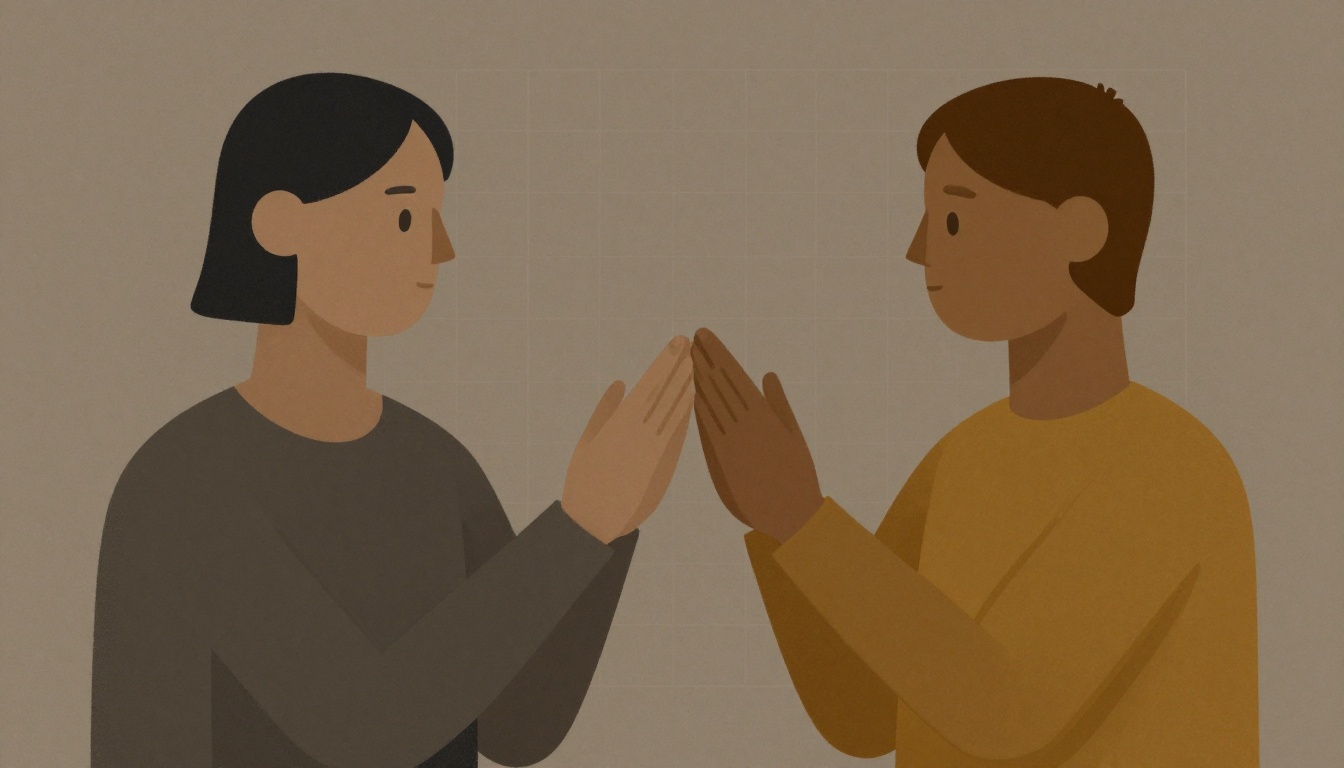
Which trapping technique is the one most commonly seen working in high-level competition?
Select one answer.
Why your micro falls apart under pressure
You know the build order. You know the matchup. Then the fight starts, three things happen at once, and your units walk into a wall while your camera sits on the wrong side of the map. The problem usually isn't game knowledge — it's the read-and-respond loop between your eyes and your hands.
Wing Chun trapping hands trains exactly that loop. Trapping is the part of Wing Chun (and Bruce Lee's Jeet Kune Do) where you use your arms to tie up and control an opponent's arms so you can land your own strikes. It is not only defensive — it can also foreshadow or include attack and counterattack moves, and it can block, divert, unbalance, or strike. (6 Dragons Kung Fu)
The core techniques have names worth learning because each one maps to a different micro decision: pak sao (slapping hand), lop sao (pulling hand), biu sao (darting hand), and huen sao (circling hand). (Self Defense Tutorials)
The honest caveat before you start
Extended trapping sequences rarely survive real pressure. They rely on both people staying at roughly one to two feet of separation, and in real fighting that range is temporary — after the first trap, fighters either clinch or separate. What you do see in high-level competition is single trapping movements, almost always a pak sao used to clear a guard and set up a strike. (Self Defense Tutorials)
That's good news for a gamer. You don't need a 12-move chain. You need one clean read and one clean response, repeated until it's automatic.
The four traps and what they train
- Pak sao (slap) — clear the obstruction. In-game: cancel a blocking unit or reposition a screen so your damage actually lands.
- Lop sao (pull) — drag the opponent off line. In-game: bait a commitment, then pull their army out of position.
- Biu sao (dart) — shoot through the gap the instant it opens. In-game: the punish window after a whiffed ability.
- Huen sao (circle) — redirect rather than meet force. In-game: rotate your army around a choke point instead of fighting into it.
A 15-minute daily drill you can run with a partner
Trapping demands spatial intelligence, speed, tactile sensitivity, reactive muscle memory, timing, precision, and balance — which is why beginners can't manage it and results take a long training path. (6 Dragons Kung Fu) So keep the drill small and boring.
- Set the range. Stand at trapping distance, roughly 0–18 inches, hands up. (MCMA System)
- Partner feeds one cue at a time. One hand extends, one elbow lifts, one knee rises — nothing else. You respond with the matching trap and a single follow-up.
- Make the timing unpredictable. Your partner attacks on their own timing, not on a counted rhythm. (Quora)
- Run 30–50 reps, then swap roles. Repetition is what shortens reaction time and builds muscle memory. (Evolve MMA)
- Add a second cue only after the first is automatic. Two feeds, then three. Never more than you can answer cleanly.
Translating the drill to your keyboard
Run the same structure in a custom game or practice lobby:
- One cue, one response. Set a bot or a training dummy to throw a single predictable action. Answer it with one specific hotkey sequence. Repeat 50 times.
- Randomize the cue. Alternate between two or three openings so you can't pre-load the answer.
- Cap the session. Fifteen focused minutes beats an hour of autopilot. Stop when your accuracy drops.
- Review one decision, not the whole game. After a match, find the single moment your hands were late and drill that exact cue.
What to expect and when
Trapping is not a beginner skill. It requires a long training path before the first results appear, and cyclical drills that look impressive are often guided choreography with a passive partner. (6 Dragons Kung Fu) Treat the first two weeks as calibration, not improvement. You are teaching your eyes to fire before your brain finishes arguing.
Quick checklist
- Partner or training dummy available for 15 minutes daily
- One cue, one response — no chains yet
- Unpredictable timing from the feeder
- 30–50 reps per side before switching
- Second cue added only after the first is clean
- One replay reviewed per session, one decision fixed
Test your understanding
Before you close this tab, check whether the core principle stuck.
Quiz: Which trapping technique is the one most commonly seen working in high-level competition?
- A) Pak sao (slapping hand)
- B) A full pak sao → lop sao → huen sao chain
- C) Biu sao (darting hand)
How the Featured Expert Can Help
Ashborn Syndicate is an anime-inspired sports and entertainment brand that blends martial arts training, esports competition, and original storytelling. It offers invite-only fitness training and publishes a dark fantasy saga, positioning itself as a niche, early-stage brand. You can learn more at ashbornsyndicate.com.